Client-Server Model
When you type a website name into your browser, where does that request actually go?
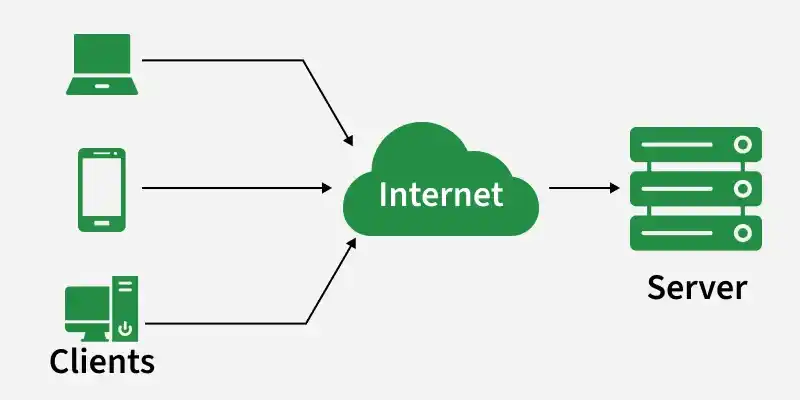
Yesterday we said cloud computing means renting servers instead of owning them. But renting from who — and how does your device actually reach one?
On the internet, every request travels from one device to another. There are two roles: a client — you, sending the request — and a server — the one receiving and responding.
Think of ordering food. You (the client) place an order — that's the request. Thirty minutes later, a delivery person (the server) brings your food — that's the response. The request is asking, the response is getting.
This whole exchange is called the Client-Server Model. Under the hood, it involves how requests actually travel, and which protocols and methods carry them — we'll get there.
This is the exact structure my own project runs on: my frontend sends the request, and my backend on EC2 acts as the server, receiving it and responding back.
Takeaway: every website you visit is just a conversation — client asks, server answers.
Tomorrow: how does your phone know exactly which server, out of millions on the internet, to talk to? That's networking — see you then.
Comments
Join the discussionNo comments yet. Be the first to comment.
CLOUD MADE EASY
Documenting my journey into cloud computing — from understanding the basics to building hands-on projects and learning how the cloud works in the real world